5K5G BLOG 5K5G Blog – IPTV Tips, Tech Updates & Streaming News
How to configure Multi-Device Support from your IPTV Reseller Panel
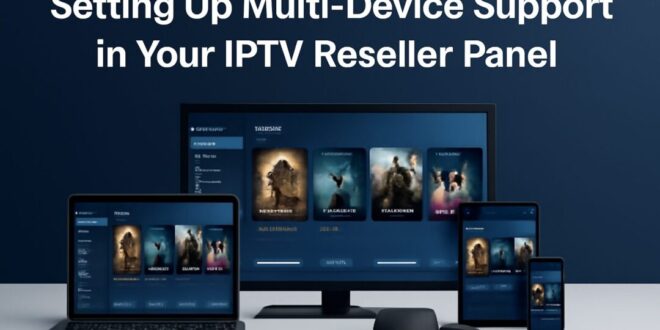
Setting Up Multi-Device Support in Your IPTV Reseller Panel In the fast-paced society of today, convenience and flexibility are what consumers have in mind. Nowhere is this more the case than with digital entertainment, where people expect to be able to watch across devices — a smart TV, laptop computer, tablet or smartphone. If you’re an IPTV reseller, it’s also your responsibility to make sure that your clients have access to their packages or channels on multiple devices. This is exactly what makes multi-device support on your IPTV reseller panel so important.
Website Link: https://bigoiptv.com/iptv-resaller-panel.php
Contact: +923096200005
As an IPTV reseller, you have a duty that exceeds merely providing television content. You’re supposed to deliver a modern viewer. This also means providing smooth experience across a range of devices. Whether your clients are tuning in through their televisions, computers or phones, providing support for a variety of devices makes you more available and convenient to them. In this post we’re going to discuss how to enable multi-device support in your IPTV reseller panel, so your customer can watch their favorited shows and sports without having you as their provider needing to authorize each device.
Why Multi-Device Support Is Important
With the increase in mobile-devices, how people now consume media has changed. Consumers are watching more and more content on smartphones, tablets and laptops today than they ever have in the past so being able to provide a flexible service that allows for device independent playback is critical as an IPTV reseller. Multi-device support means that users don’t have to be tied down to one platform and can switch between devices depending on the tasks they need to perform.
Not to mention, users are happier when they have multi-device access. It provides the ability for users to watch IPTV on their own devices (cell phones, computers, etc. ) without any other device or player. For instance, a user could start viewing a show on their TV set in the living room but then take it outdoors on their mobile phone without skipping a beat.
For IPTV resellers, this type of seamless experience promotes customer loyalty–if the service does what they need it to on all their devices, they’ll be less likely to leave.
Factors to Be Considered Before Enabling the Multi-device Support
Before we get into the technical implementation of multi-device support, there are a few things you’ll want to keep in mind:
Device Compatibility:
Step 1 is to make sure your IPTV platform is compatible with several different devices. This ranges from smart TVs; laptops to desktop computers, tablets and mobile phones. There may be specific demands for OS, resolution and app version of the devices.
User Authentication:
A strong authentication mechanism is required to support multiple devices dive side by side. Until think that, you can use Accounts. shared Instance(). You also need permission structure(error)below and if result is true, just handle the show next view control. ) fund logion() { guard TextManager.getText(text: self. So users want to be able to access their IPTV service on more than one device, they don’t have to re-enter their username and password each time he did so by setting up features like single sign-on (SSO) or authentication tokens.
Device Management:
You are an IPTV service provider, and you surely do not want anonymous users taking advantage from your service. This means that I should track/logging quota a certain user can be using over period-time and what.sexual domain names he is behind. You can set these limits in a device-management tool and provide custom service plans based on how many devices the customer requires.
User Experience (UX): Multi-device is important, not only for accessibility reasons but for ensuring seamlessness and consistent user experience across devices. IPTV service design and functionality shoudl be identical irrespective of the devices. Hence, the user doesn’t have to deal with any kind of interface inconsistency as he switches from one device to another.
Instructions to configure Multi-Device in Your IPTV Reseller Panel
After you’ve evaluated the above points, it’s time to establish multi-device support. Here’s what you need to know: Things are about to get very weird — and potentially a tiny bit wet.
Ensure Compatibility with Multiple Platforms
The other is to make sure that the IPTV service have apps for all the major operating systems. So, Plenty of IPTV service has apps designed for some operating system (Android, iOS, Windows and MacOS). Ensure that your panel and the delivery system are compatible with these.
Smart TVs:
Some of the most popular brands include those from Samsung, LG, and Roku which make it possible for people to add IPTV apps. These apps should be designed for how people use their televisions, with a pleasant UI/UX to easily navigate and view content.
Mobile Apps: Both android and iOS apps ought to be accessible, giving users the option of mobile devices. You could provide options such as casting to the TV or offline viewing, which users are increasingly craving on mobile.
Desktop/Laptop: Desktop and laptops are the primary devices that users work with to use IPTV services in browsers areas. Make sure your IPTV panel is compatible with all web browsers (cross-platform). This may mean developing a mobile-friendly site or providing a desktop app which is specifically developed for greater manageability.
Use Single Sign-On (SSO) That’s right, you also need to implement SSO!
If you want to make sure that the users can log in from different devices, think about using Single Sign-On (SSO) system. Users can therefore ‘sign in once’ and use the service from all their devices without having to log in each time.
If you are using a normal IPTV panel you can use an SSO system with secure authentication protocols such as OAuth or OpenID. This would improve the customer experience because people won’t be required to memorize several logins for multiple devices.
Enable Simultaneous Device Access
For your reseller service, you might like to have multi-device streaming on hand. But there is also a downside of it, especially in unauthentic sharing of account. You ought to be able to at least restrict or monitor number of devices a customer can connect to simultaneously.
In order to do so, access the device management feature in your reseller panel. This allows counting devices per user account and limiting them in accordance with the service plans. For instance, a free or lite plan might restrict users to a single device, while a premium option permits five devices to connect at once.
Monitor Device Usage and Performance
After supporting multi-devices, you have to always keep an eye on how new devices are being used. Monitoring your device activity enables you to fine tune your service and address any problems. For instance, slow buffering or poor quality on certain devices can be a sign of device incompatibility or escalating network speeds problems.
Device Usage Analytics The IPTV reseller panel that you purchase should have analytics solutions to tell about every device your customer is watching on and this can help fraud detection quickly.
Maintain Consistent Quality Across Devices
In order to maintain the experience, it is absolutely necessary that the IPTV service maintain a high level of quality on all devices. This may mean that streaming quality is adjusted according to the capabilities of the device and to internet speed.
In other words, a mobile device may require the ability to stream in lower resolution than would be required on a desktop or smart TV. Receiving a stream is more difficult than sending a single, and your IPTV system ought to be as intelligent as possible when it comes to automatically detecting the capability of the device being used (if that’s something it can support) and adjusting the picture quality sent accordingly.
Conclusion
Enabling support for multiple devices in resellerIPTV panel is an important element to offer a great service making sure you cover the needs of your clients. By allowing your users to watch on any device, you can create a user-friendly environment that retains and satisfies subscribers.